Land of a
thousand
songs
Work
Discover / Define
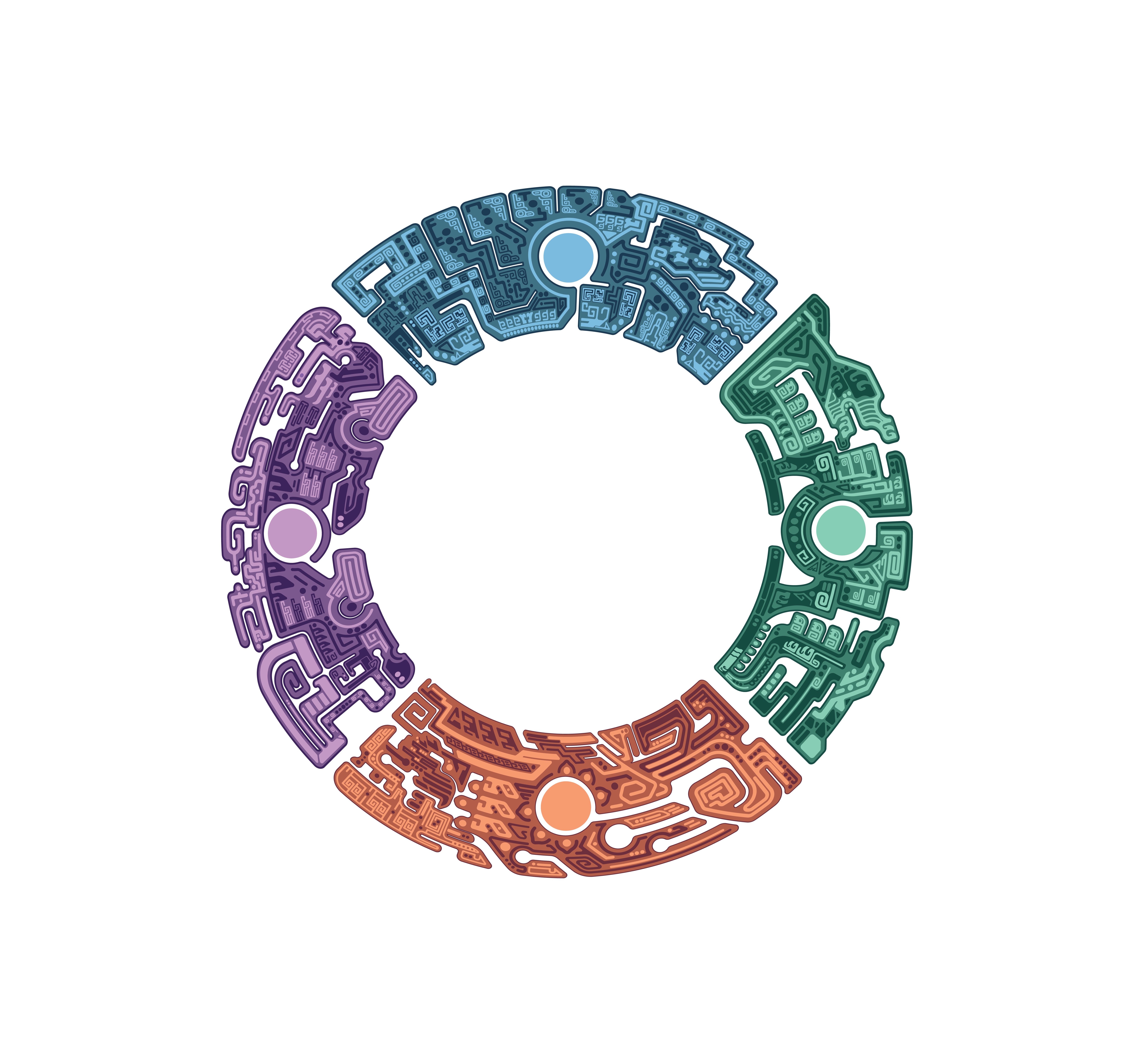
To create a profound, non-literal sensory experience that uses the abstract principles of the Four Symbols (四象) as a dynamic framework to visually express the universal rhythms of life and the foundational worldview of traditional Chinese culture.
Identity / Deliver
China is composed of 56 ethnic groups, each with its own unique clothing, language, festivals, and traditional arts. Through the visual format of hybrid motion posters, these cultural elements can be presented in a ways to show traditional costumes and accessories. The dynamic nature of animation create storytelling for audiences to understand and remember these ethnic groups, helping to strengthen awareness and appreciation of China’s multicultural heritage.
Design Process
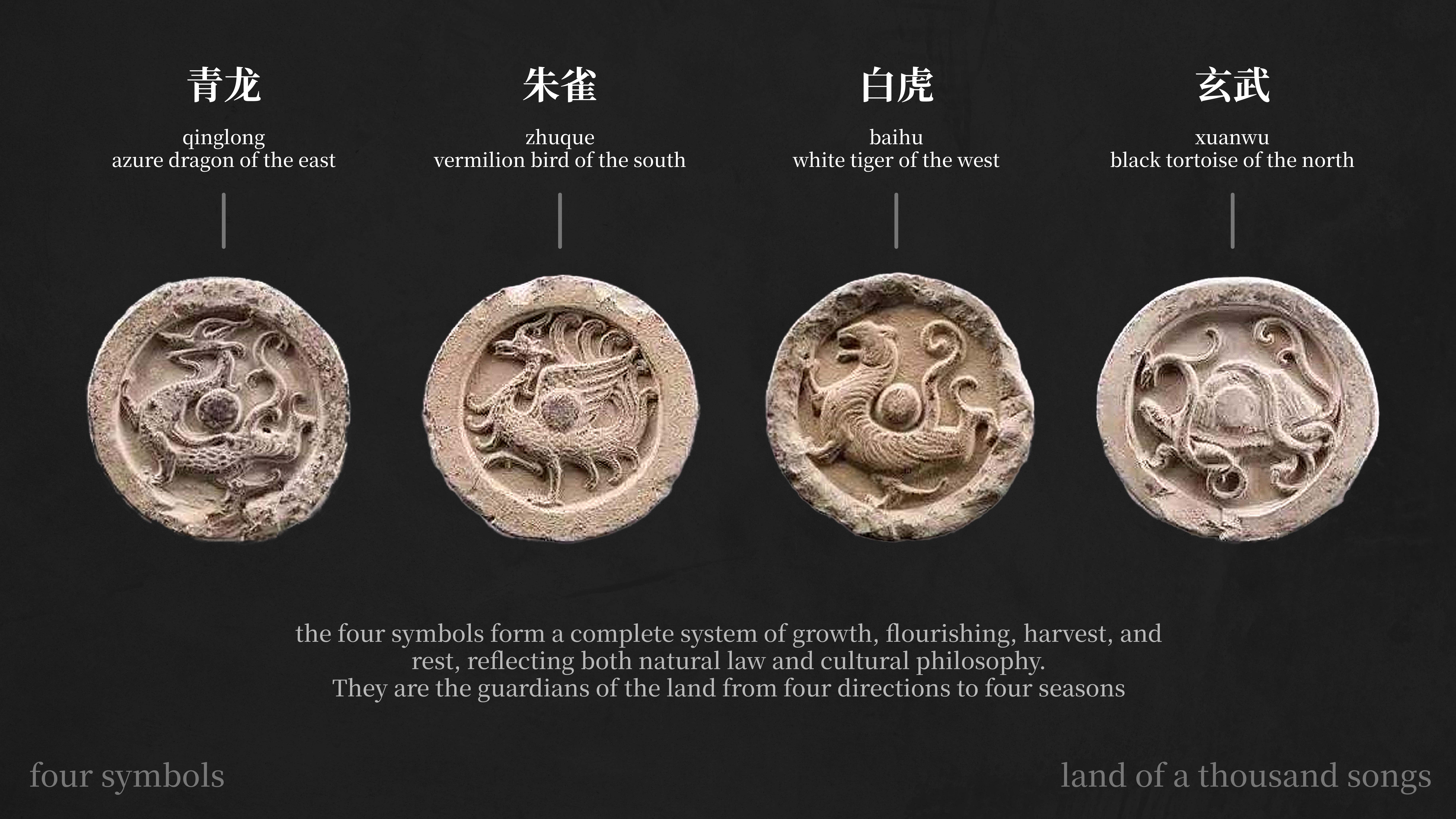
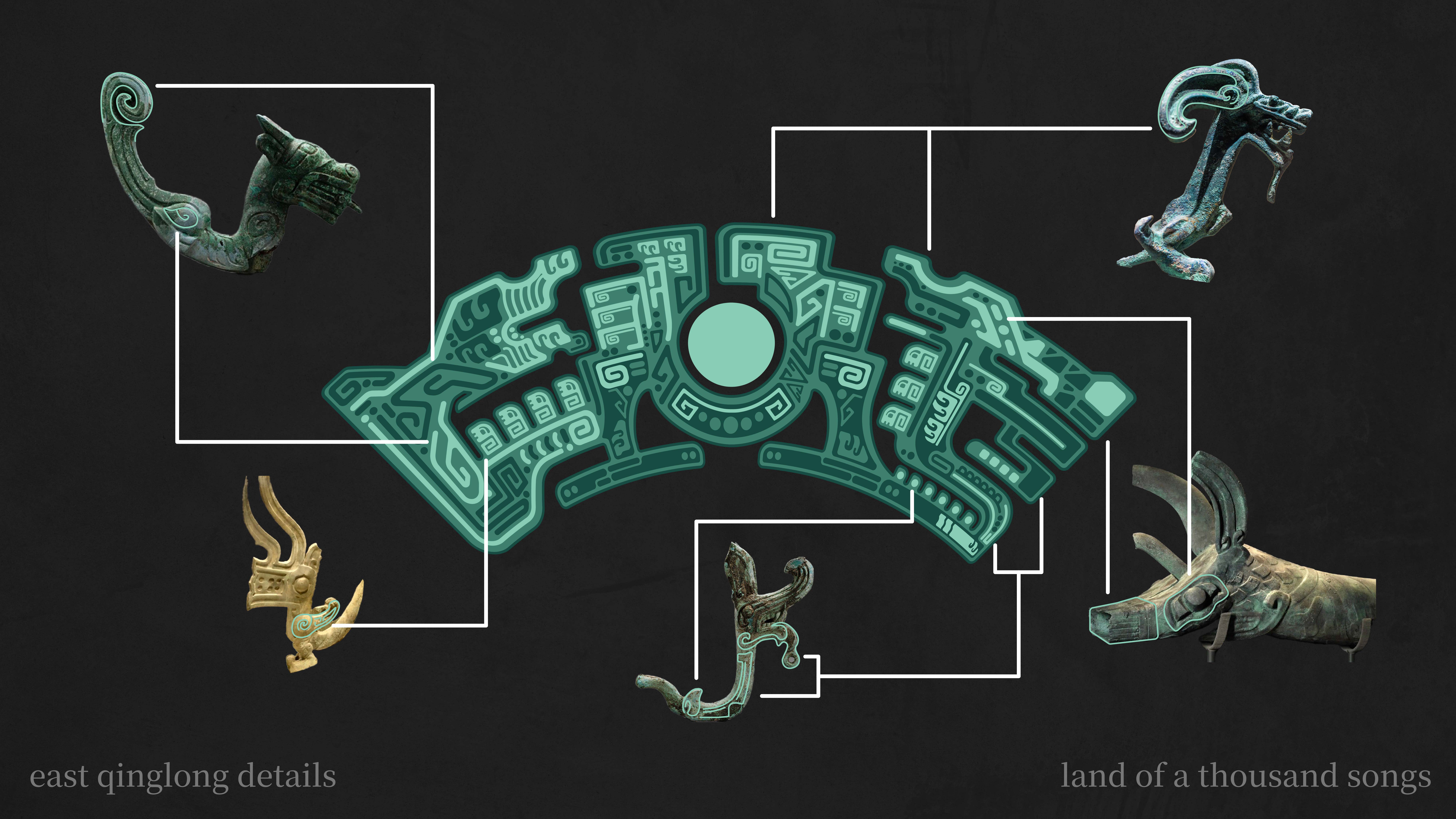
青龙 Qinglong
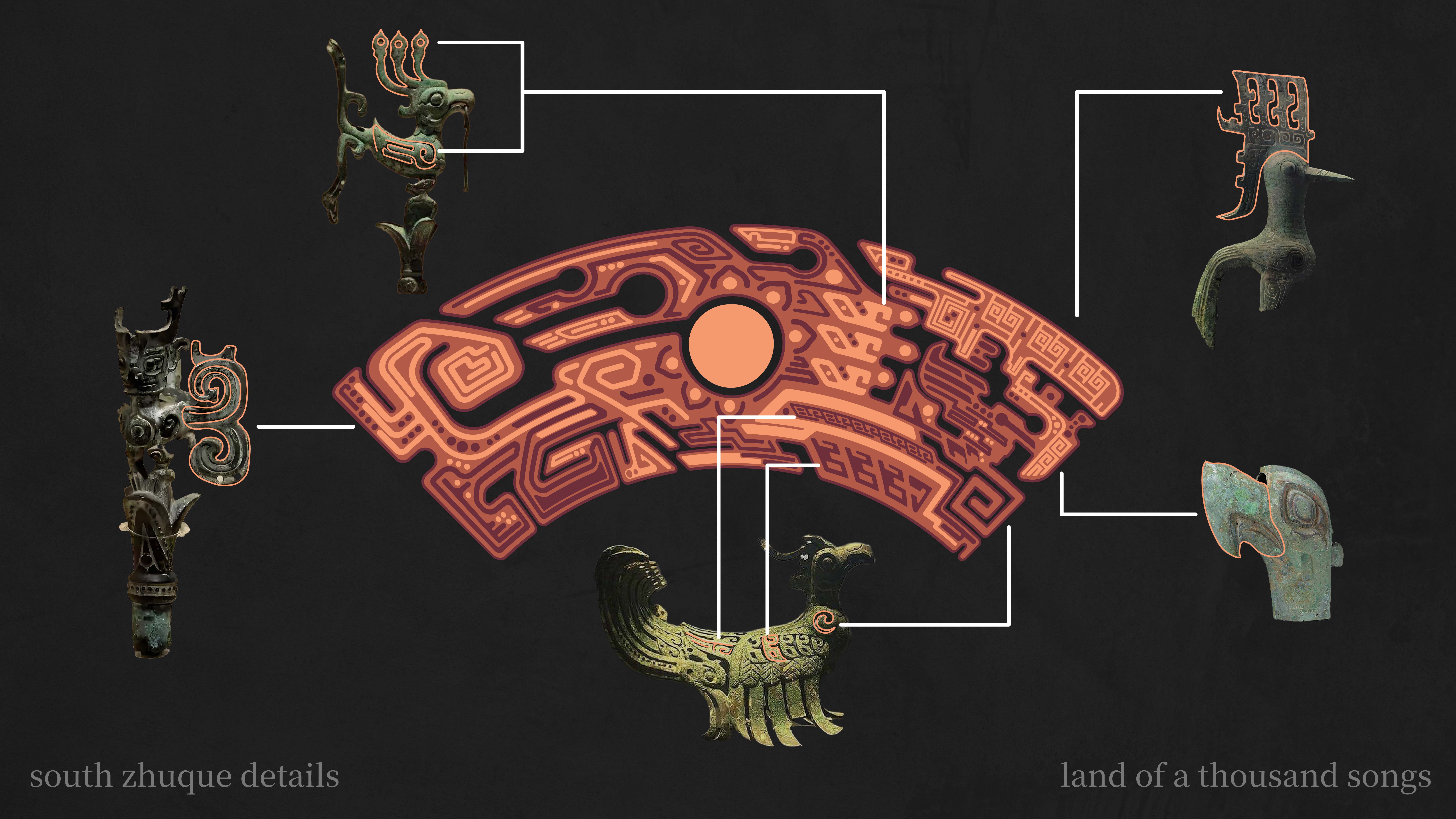
朱雀 Zhuque
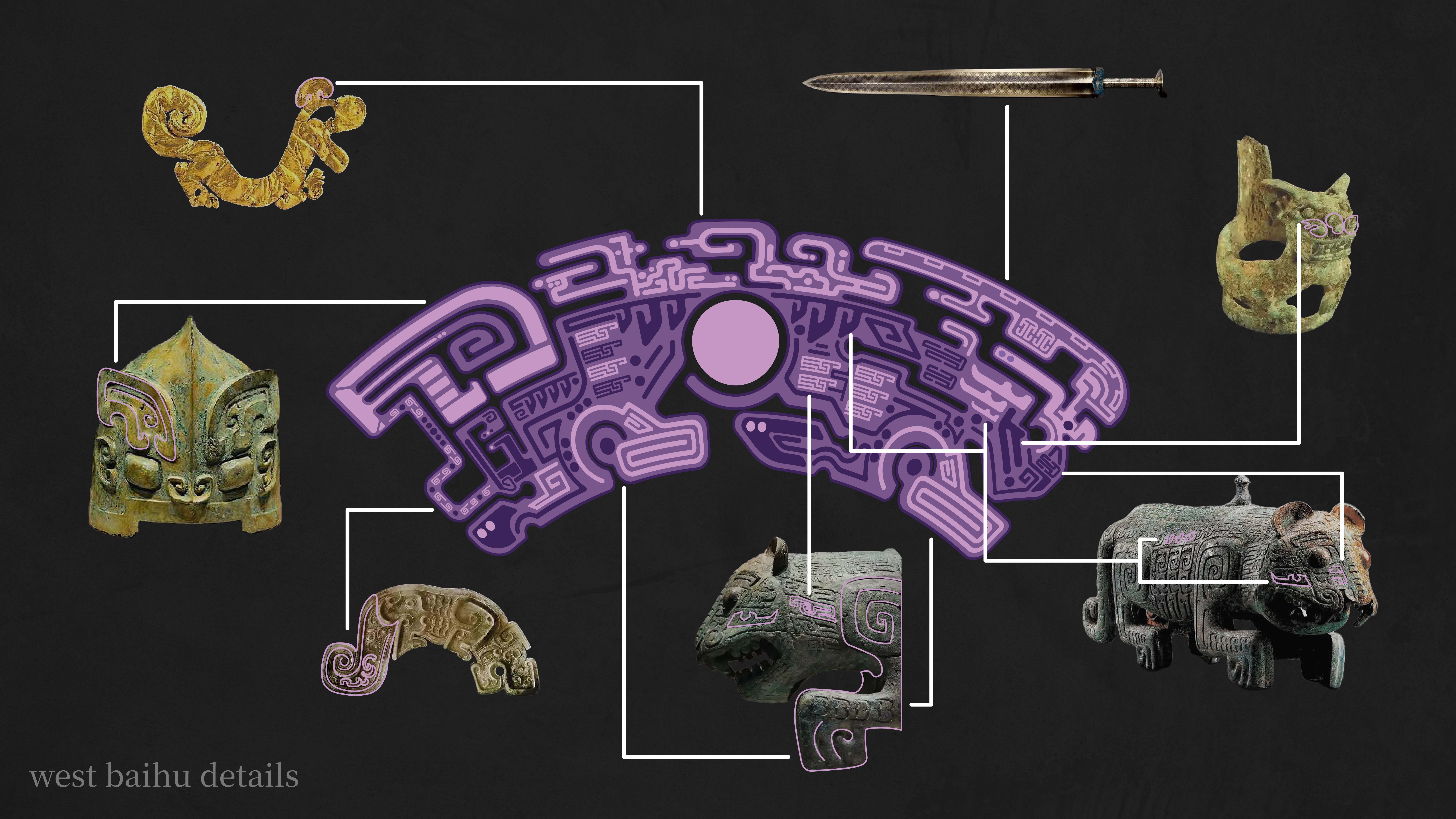
白虎 Baihu
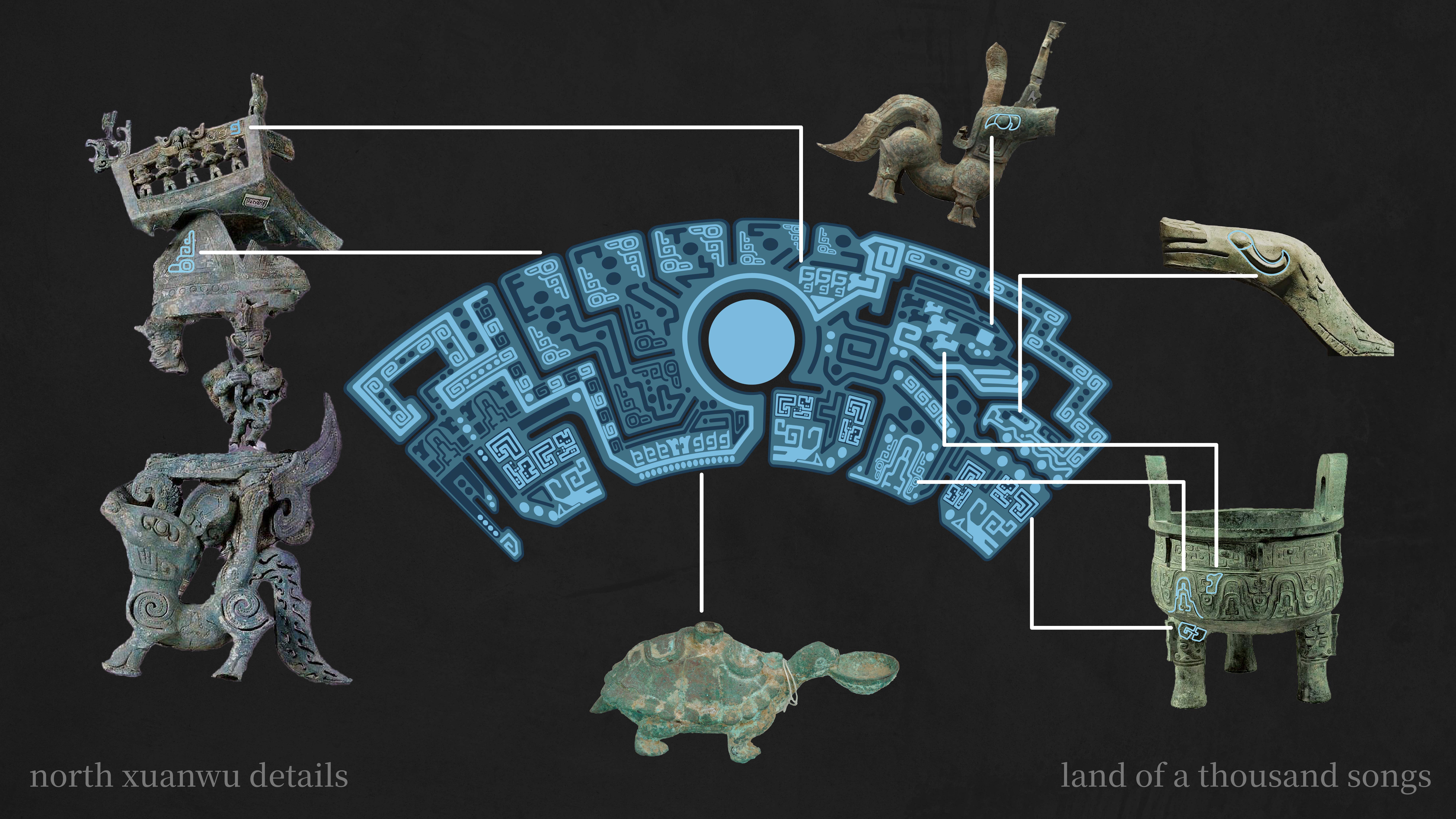
玄武 Xuanwu
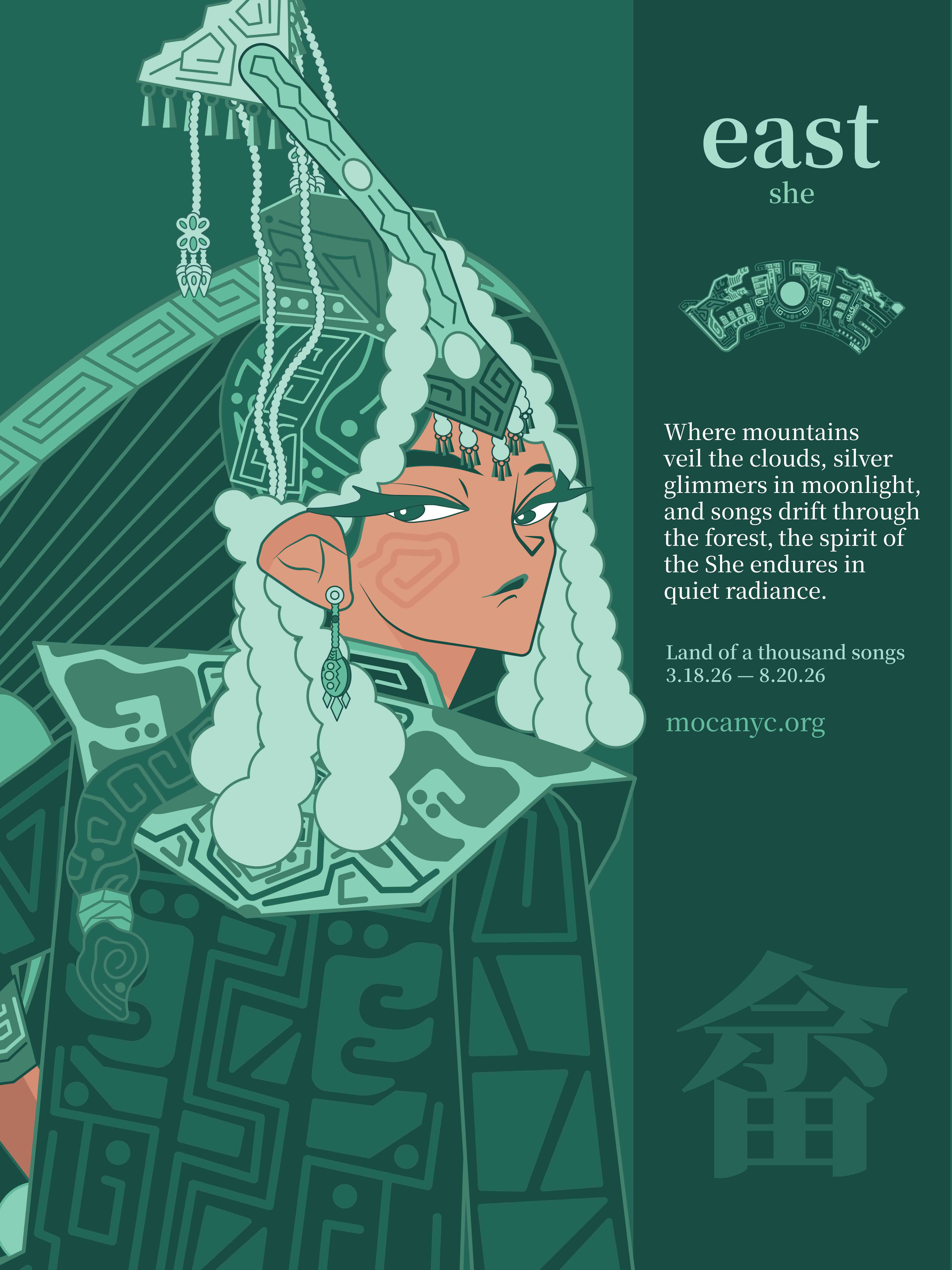
She Ethnic Group
The She ethnic group’s “Phoenix Costume” is the most important traditional clothing worn by She women and a key symbol of their culture. It is inspired by the phoenix, which represents beauty, good fortune, and respect for women. The costume includes embroidered garments, a “phoenix crown,” and silver ornaments, all designed to resemble parts of a phoenix such as its head, wings, and tail.
Beyond fashion, the Phoenix Costume carries history and identity, it reflects the She people’s belief in the phoenix as a cultural symbol and preserves their stories through patterns and craftsmanship
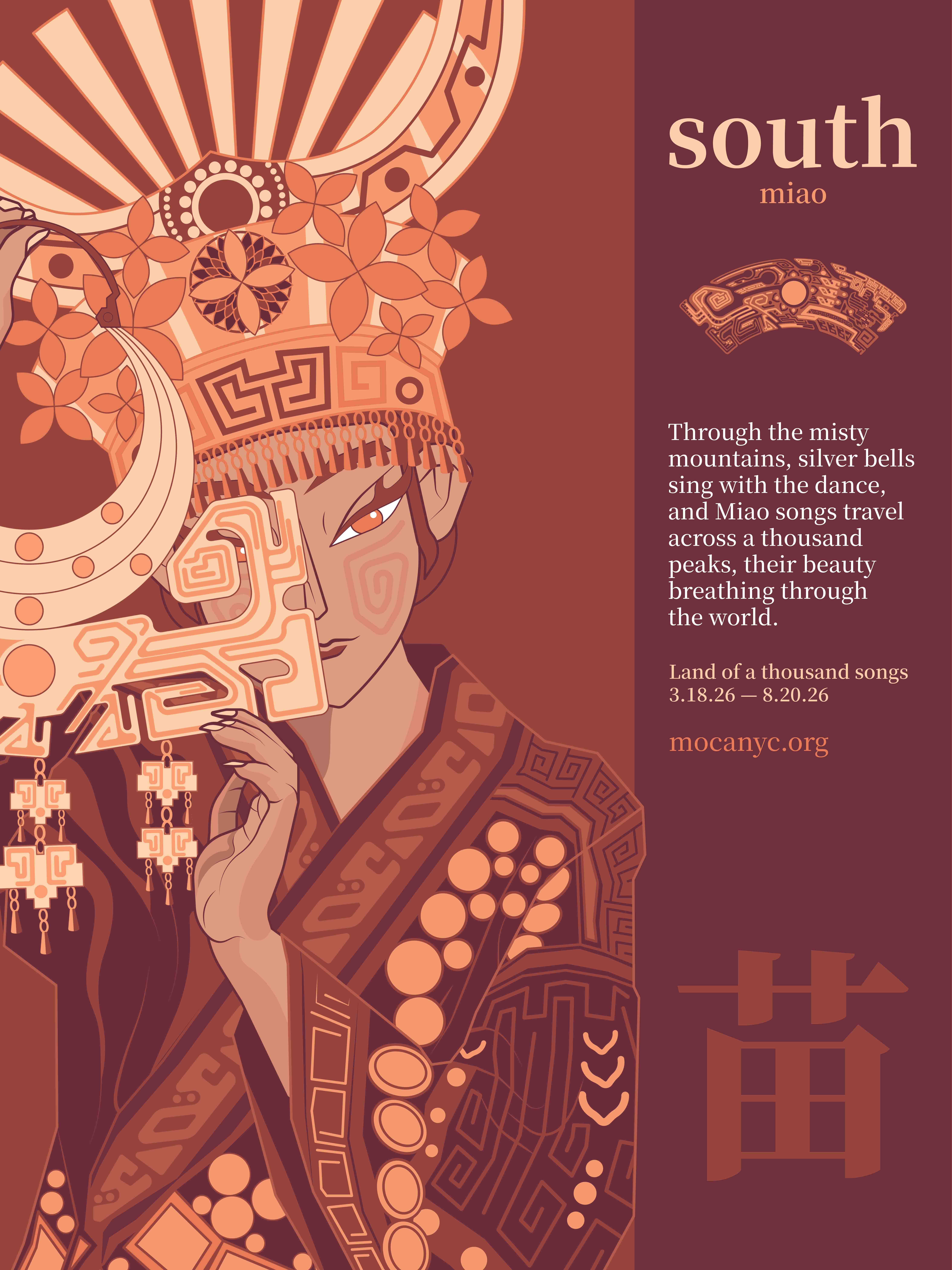
Miao Ethnic Group
Miao ethnic clothing is one of the most elaborate and diverse traditional costumes in China. It is known for bright colors, intricate embroidery, batik (wax-dyeing), and heavy silver ornaments. Women’s outfits are especially rich, often including pleated skirts, decorated jackets, and large silver accessories.
The designs often feature patterns inspired by nature and history, and the clothing is sometimes called a “wearable history,” reflecting the Miao people’s cultural identity and traditions
Tibetan Ethnic Group
Tibetan traditional clothing is adapted to the harsh climate of the Tibetan Plateau. The main garment is the chuba, a long, loose robe with wide sleeves and a thick waist. It is usually made from wool or animal skin to provide warmth.
The design is highly functional, people can adjust it by exposing one arm in warmer weather or using it as a blanket at night.
Tibetan clothing is also known for its bold colors and rich accessories, including belts, boots, and jewelry made of silver, coral, and turquoise, reflecting both cultural identity and regional diversity.

Mongol Ethnic Group
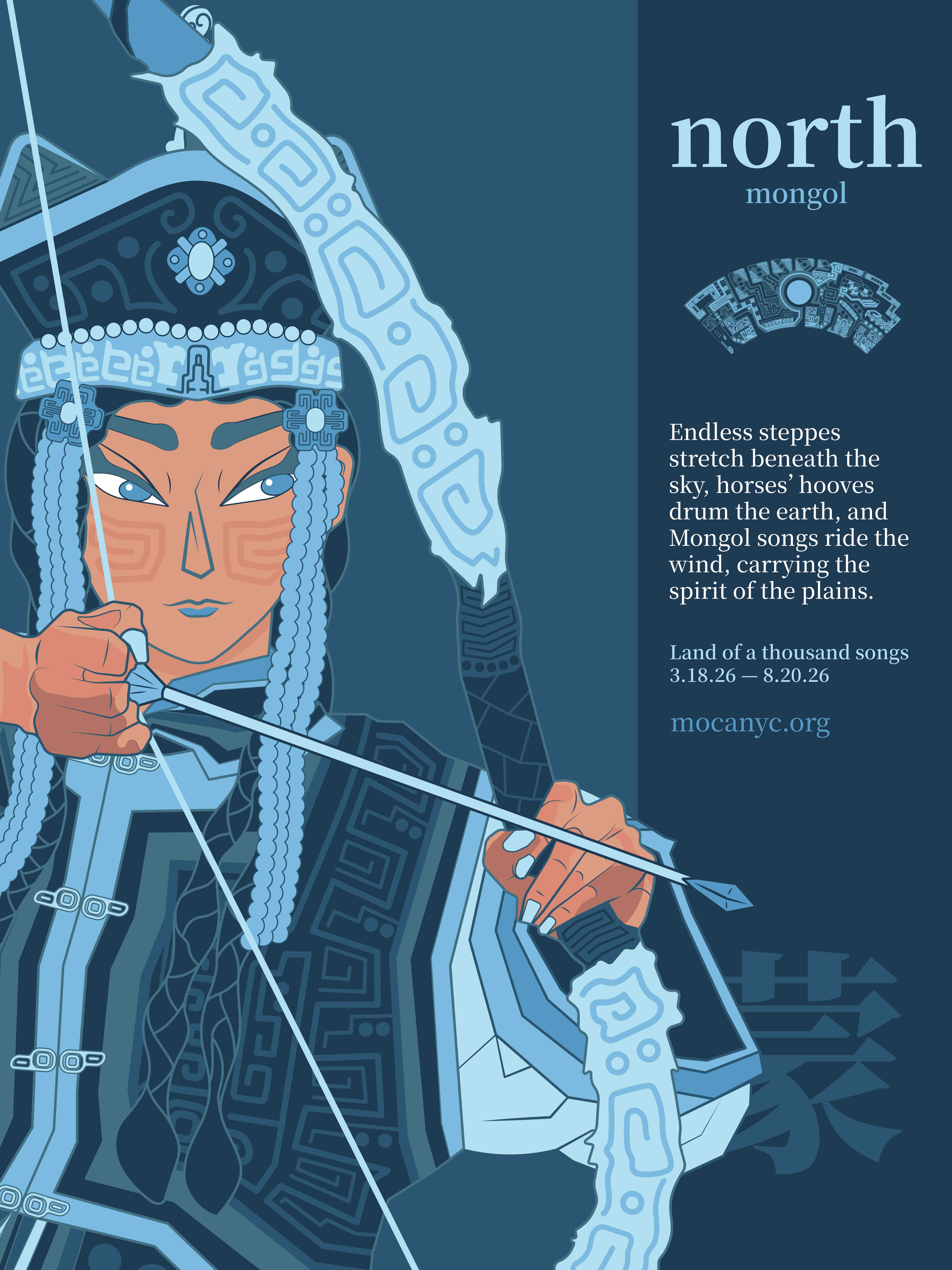
Mongolian traditional clothing reflects a nomadic lifestyle on the grasslands. The main garment is the deel, a long, loose robe worn by both men and women, usually tied with a belt. It is designed for practicality, keeping warm in cold climates while allowing movement for riding horses.
The outfit typically includes boots, hats, and accessories, with bright colors and bold decorations inspired by nature such as the sky and grassland.
Mongolian clothing combines function and cultural identity, representing their environment, traditions, and nomadic heritage.